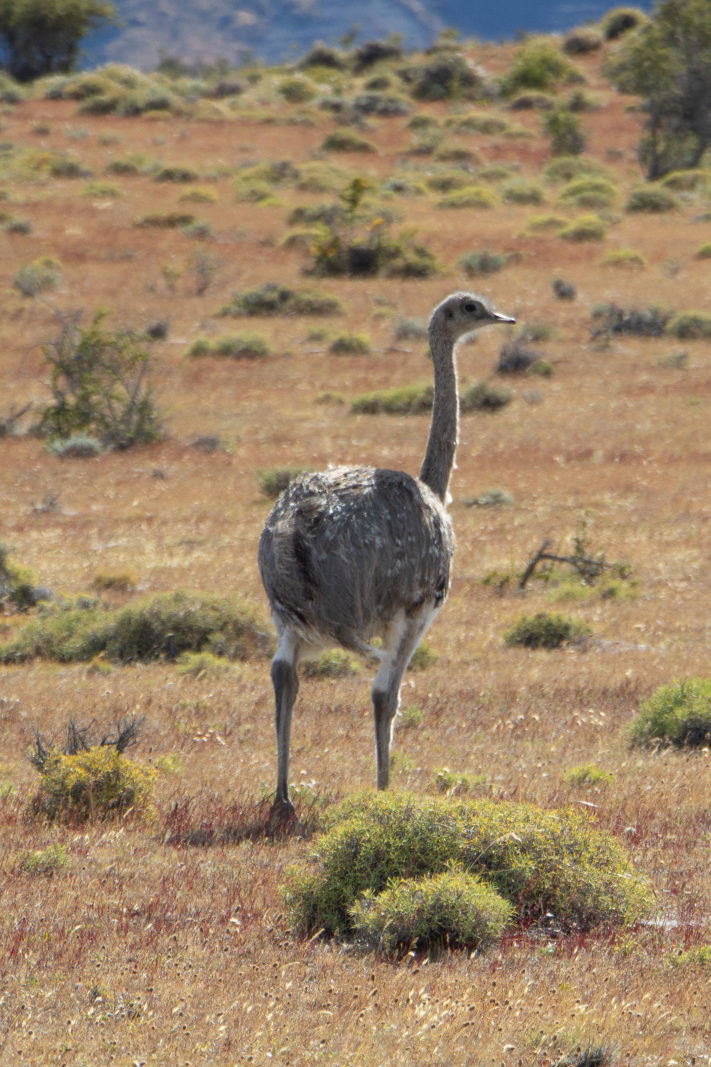
The lesser rhea (Rhea pennata), often known locally as Darwin's rhea, is one of Patagonia's most remarkable birds. Standing around one metre tall, it resembles a small ostrich, with long legs, a long neck, and soft grey-brown plumage that blends perfectly with the windswept landscapes of southern Chile and Argentina.
Rheas inhabit the open grasslands, shrublands, and steppes of Patagonia, where their excellent eyesight allows them to detect danger from great distances. Although flightless, they are highly adapted to life on the ground and can run at speeds of up to 60 km/h when threatened.
Their diet consists mainly of grasses, seeds, leaves, berries, and insects, making them important contributors to the Patagonian ecosystem. Rheas are often seen foraging alongside guanacos, benefiting from the additional vigilance provided by larger groups of animals.
One of the species' most unusual behaviours occurs during the breeding season. Males construct nests, attract multiple females, and then take sole responsibility for incubating the eggs and raising the chicks. A male may care for dozens of chicks from several females, fiercely defending them from predators and other threats.
In Torres del Paine National Park, rheas are frequently encountered in open areas of the steppe, particularly around Laguna Azul and the eastern sectors of the park. Their elegant movements and prehistoric appearance make them a favourite subject for wildlife photographers and birdwatchers alike.
Rheas can be surprisingly challenging to photograph despite their size. Their natural wariness means they often move away long before a photographer can approach closely. Early morning and late afternoon provide the most attractive light, helping to reveal detail in their plumage while adding warmth to the surrounding grasslands.
A telephoto lens in the 300–500mm range is useful for portraits and behavioural images, while wider compositions can be effective when placing the bird within Patagonia's vast landscapes. Look for opportunities to photograph rheas alongside guanacos or with the dramatic peaks of Torres del Paine in the background to create a stronger sense of place.
During the breeding season, males accompanied by groups of chicks can provide particularly rewarding photographic opportunities. Patience and careful observation are often rewarded, especially when birds pause to scan their surroundings before continuing across the steppe.