From Punta Arenas to Puerto Natales
Day 4 / 2/15/2026
An early morning walk along the waterfront gave us one last opportunity to experience the quiet atmosphere of Punta Arenas before continuing north through Patagonia. As the first light of sunrise spread across the Strait of Magellan, the stillness and vast open landscapes of southern Chile felt even more dramatic. After packing and checking out of the hotel, we caught the midday bus to Puerto Natales, arriving later that afternoon in the small town that would become our base for exploring Torres del Paine.
Once settled into our hotel, we headed out for a walk along the waterfront promenade beside the Señoret Channel. With distant mountain views, cold Patagonian air, and the constant sound of the water against the shore, Puerto Natales immediately felt calmer, smaller, and even more remote — a fitting introduction to the landscapes that awaited us deeper in Patagonia.
Photo Diary
One Last Morning in Punta Arenas
Standing in the centre of Plaza Muñoz Gamero, the Monumento a Hernando de Magallanes is one of Punta Arenas’ most important landmarks. The monument was erected in 1920 to commemorate the 400th anniversary of Magellan’s voyage through the strait, recognising the role the region played in opening a maritime route between the Atlantic and Pacific Oceans.
The statue of Magellan stands above a series of indigenous figures representing the native peoples of Patagonia, including the Selk’nam. Surrounded by tall trees in the city’s main square, the monument feels both historic and symbolic — reflecting the mixture of exploration, isolation, and cultural identity that defines this far southern region.
The Road North to Puerto Natales
Punta Arenas to Puerto Natales
Route prepared with FOSSGIS OSRM. Report a map issue.
First Evening on the Puerto Natales Waterfront
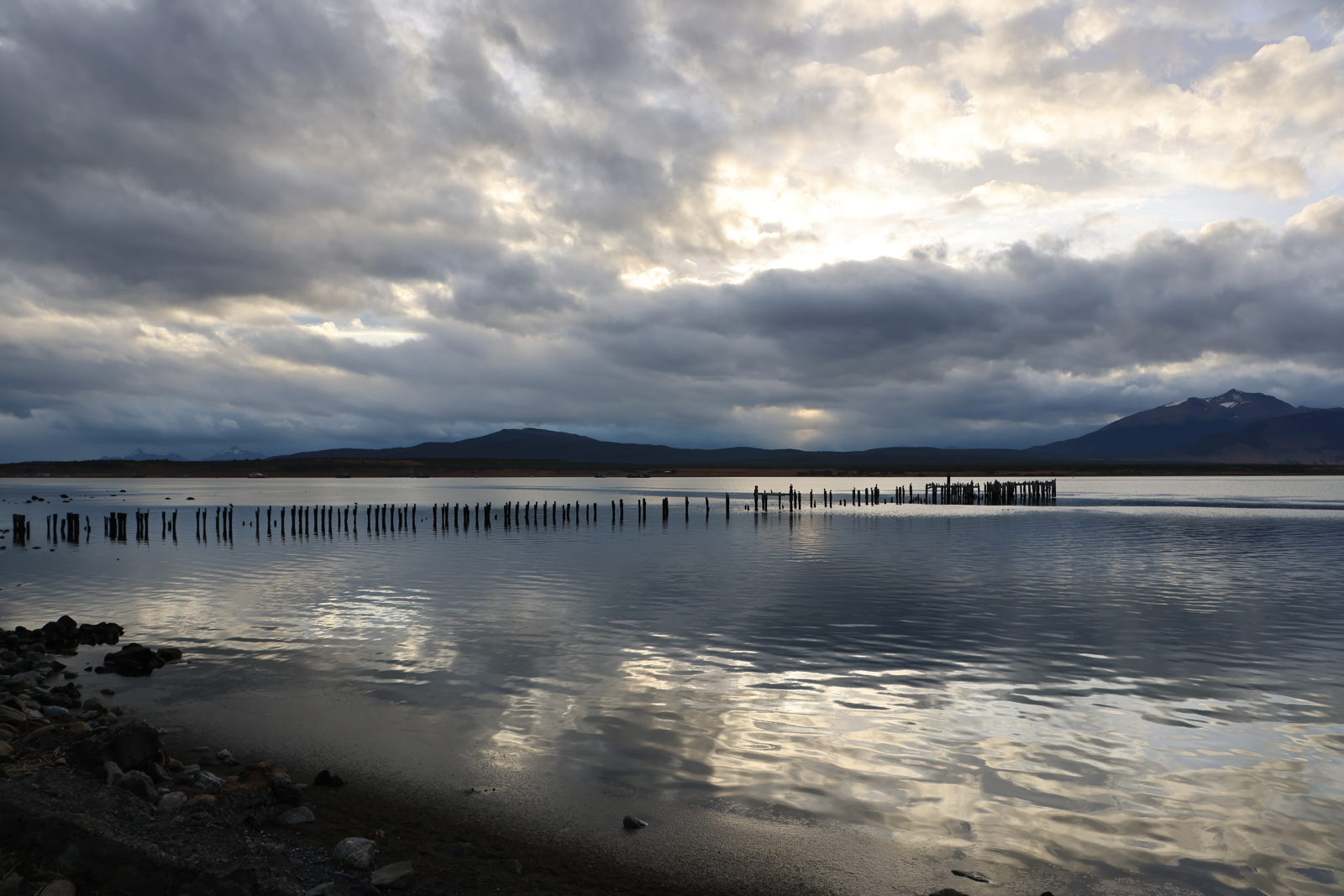
The old wooden pier stretching out into the Senoret Channel is one of Puerto Natales’ most photographed views, with the mountains of southern Patagonia rising in the distance beneath heavy skies. Originally part of the town’s historic industrial waterfront, the remains of the pier now stand weathered by decades of wind and water, creating a scene that feels both isolated and timeless.
This large sculpture beside the waterfront in Puerto Natales represents the prehistoric Milodon — a giant ground sloth that once inhabited southern Patagonia thousands of years ago. The creature became closely associated with the region after the discovery of remarkably well-preserved remains at the nearby Cueva del Milodón, a cave located just outside the town that is now one of the area’s best-known natural attractions.
Standing several metres tall, the statue is an unusual but memorable reminder that Patagonia’s landscapes were once home to extraordinary prehistoric wildlife. Seeing the sculpture while walking through Puerto Natales added another layer to the region’s sense of scale and isolation — a place shaped not only by mountains and glaciers, but also by a deep natural history stretching far beyond recorded human exploration.